Picture dictation – storyfied!
Aug 29, 2026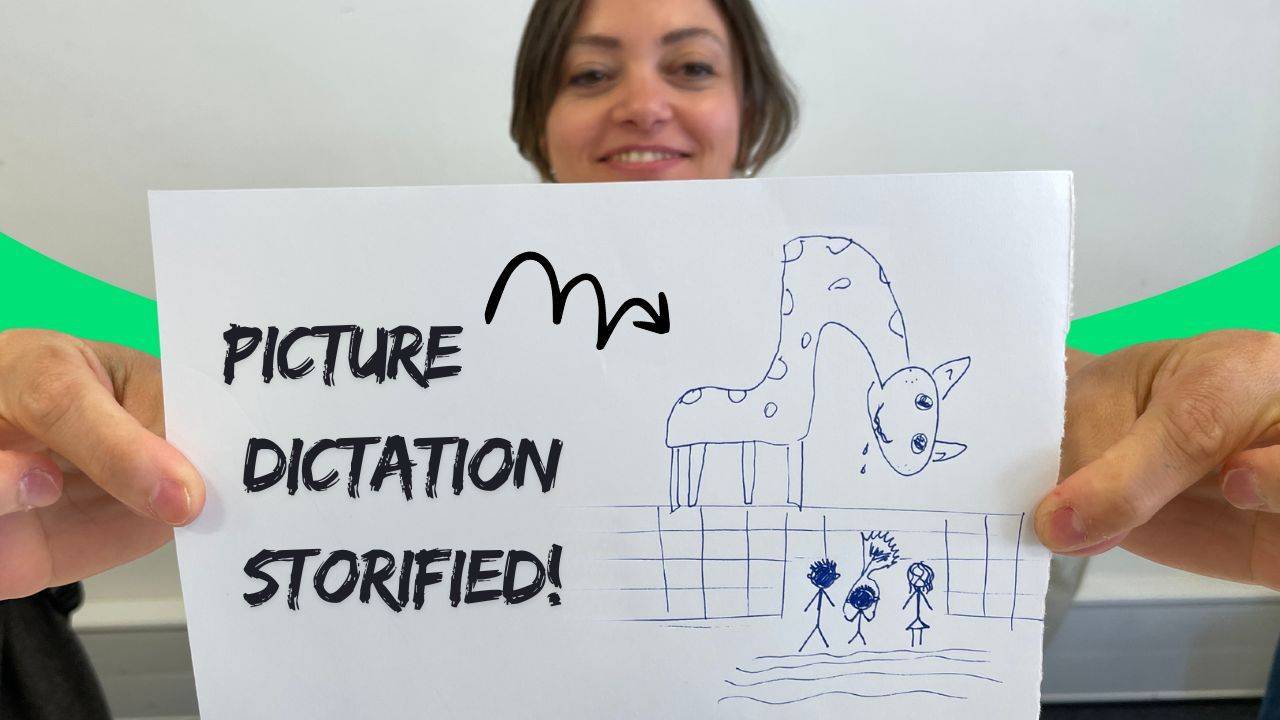
✏️ A classic language teaching technique gets a story makeover
The standard approach
In a standard picture dictation, the teacher describes a picture, and students draw it as they listen.
Afterwards, students compare their drawings with the original.
The following is based on an idea from the 👉 Teaching English website
Does everyone have a pencil and a piece of paper?
OK, I want you all to draw a picture.
I am going to tell you exactly what to draw, OK?
Are you ready?
So, in the middle of the picture, there is a big house.
[Teacher pauses for students to draw.]
The house has a door and two windows.
[Teacher pauses for students to draw.]
On the roof of the house there is a chimney.
Etc.
For students, there seems to be something inherently fun and motivating about a picture dictation. Yet they tend to be associated with primary classrooms or A1/A2 levels.
That's likely because of how they traditionally work: picture dictations typically focus on details and accuracy (hence the 'dictation'), with prepositional phrases as a common language focus (on the left, at the top, in the background, etc.).
Because accuracy depends on following instructions closely in real time, the drawing and instructions usually happen simultaneously.
But it doesn't have to be that way.
An alternative approach
Personally, I have always preferred to give the complete instructions before students pick up their pencils – an approach that I have found to be more flexible and suitable for a wider range of levels.
Here's an example I have used with all kinds of students, including adults and advanced learners of English.
I want you to draw a picture.
I am going to describe it to you.
Don't draw it yet – put down your pencils and just listen first.
Are you ready?
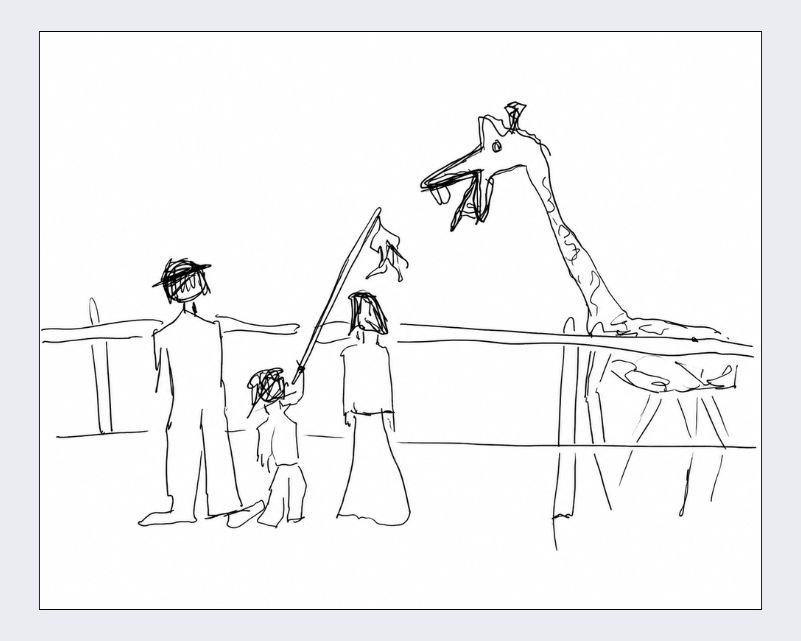
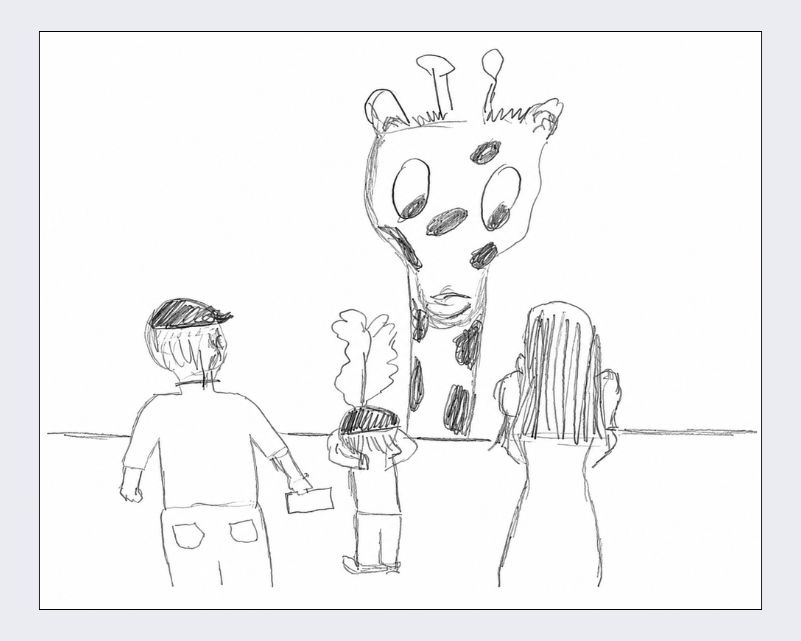
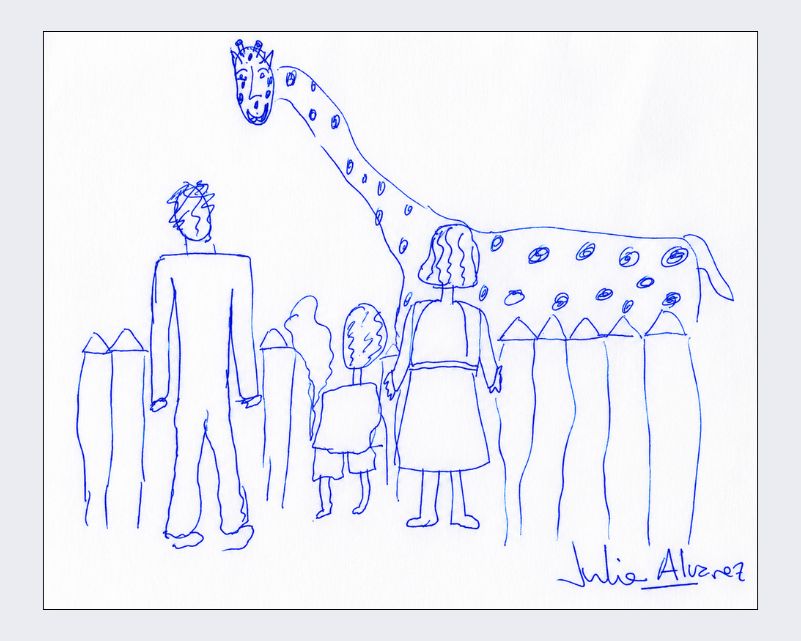
I want you to draw three visitors at the zoo: mum, dad and their boy – he looks around seven or eight years old.
They are standing with their backs to us.
In front of them, there’s a fence.
And on the other side of the fence, facing us but looking down at the humans, is a giraffe – a hungry giraffe, hoping for a snack.
The boy is in the middle.
His dad is on his left.
His mum is on his right.
And the boy is holding some sort of large, green leaf with a long, thick stalk.
He's holding it with both hands.
Did you get that?
Let me repeat it.
[Teacher repeats instructions – two more times if necessary.]
OK, pick up your pencils and draw your pictures.
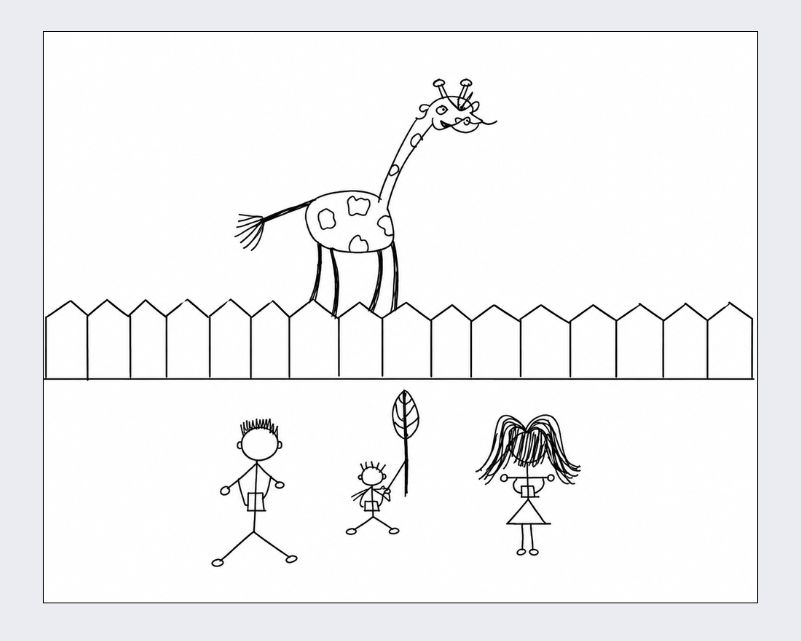
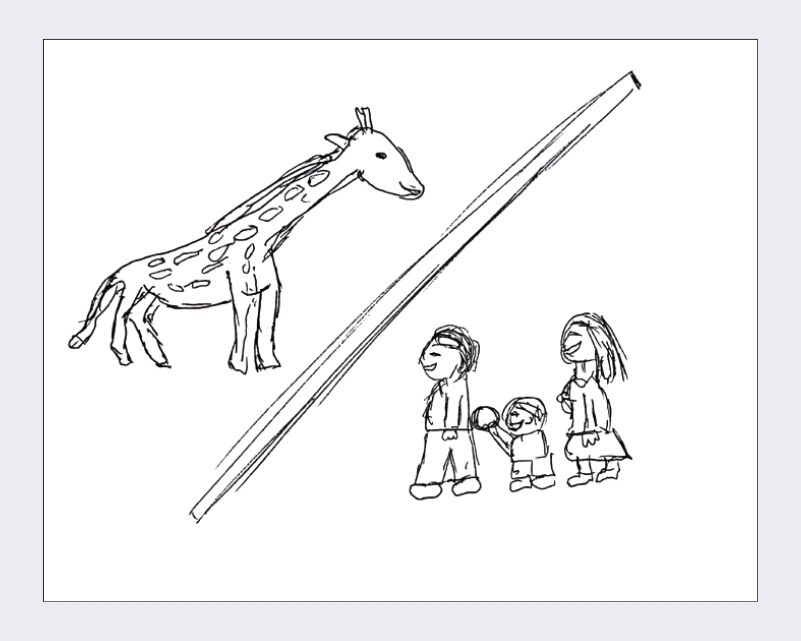
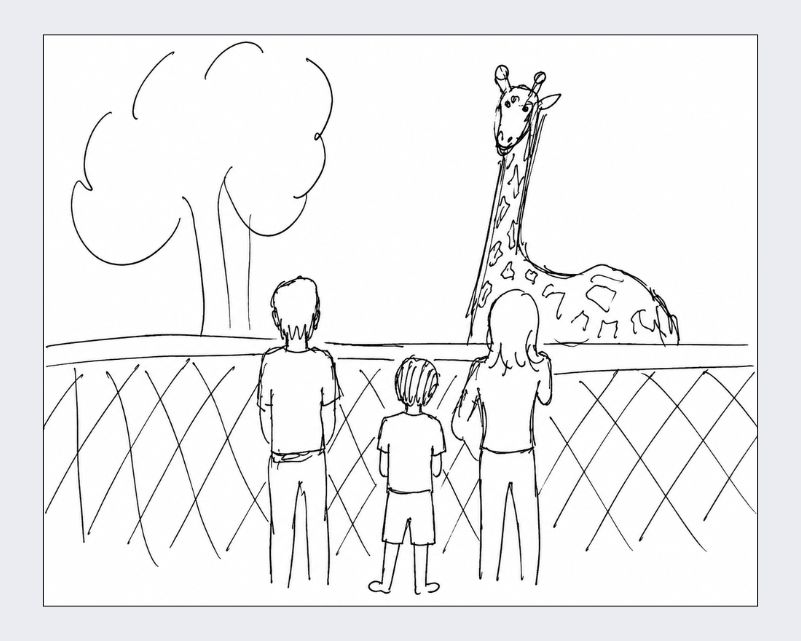
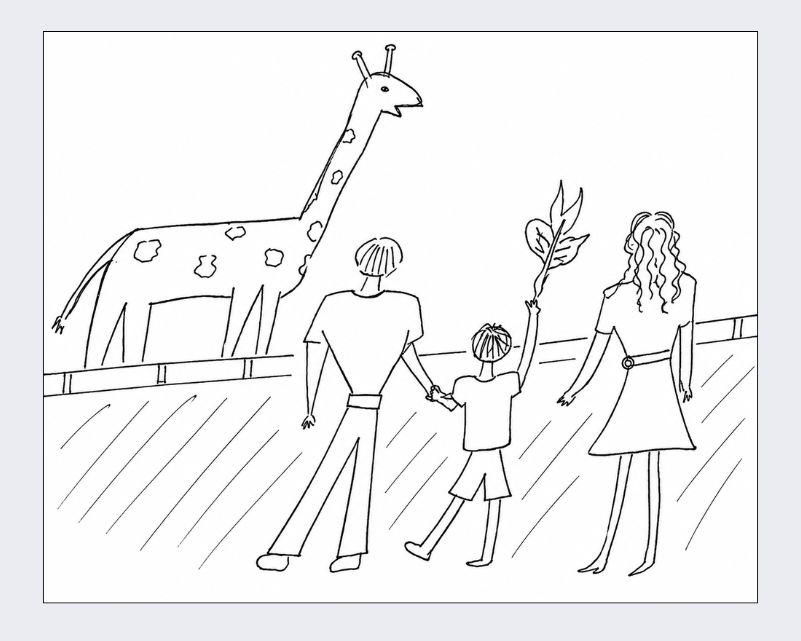
Thanks to my great NILE course participants Deniz (in the cover photo), Sandra, Pilar, Umida, Marta, Julia and Cristina for these gems:
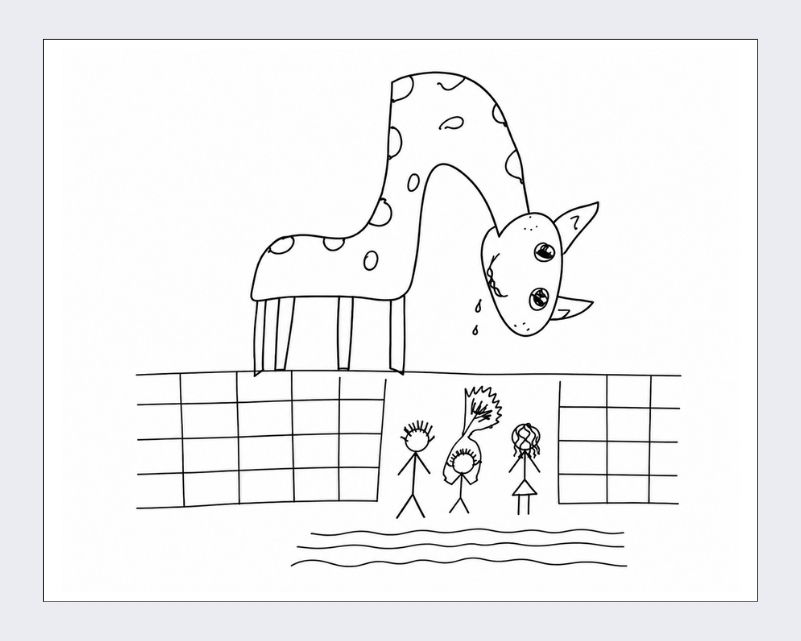
What happens next?
In a standard picture dictation, students will see the actual image and things usually stop there.
But there is something different about this one: the image is from a story titled Giraffe One, Humans Nil.
The natural next step is to ask students: What do you think happens next?
Video & Story
Giraffe One, Humans Nil is a story based on a viral video.
It is from Video & Story – the LessonStream mini course (see below).
Students will eventually see the video and compare the scene with the one they imagined and drew.
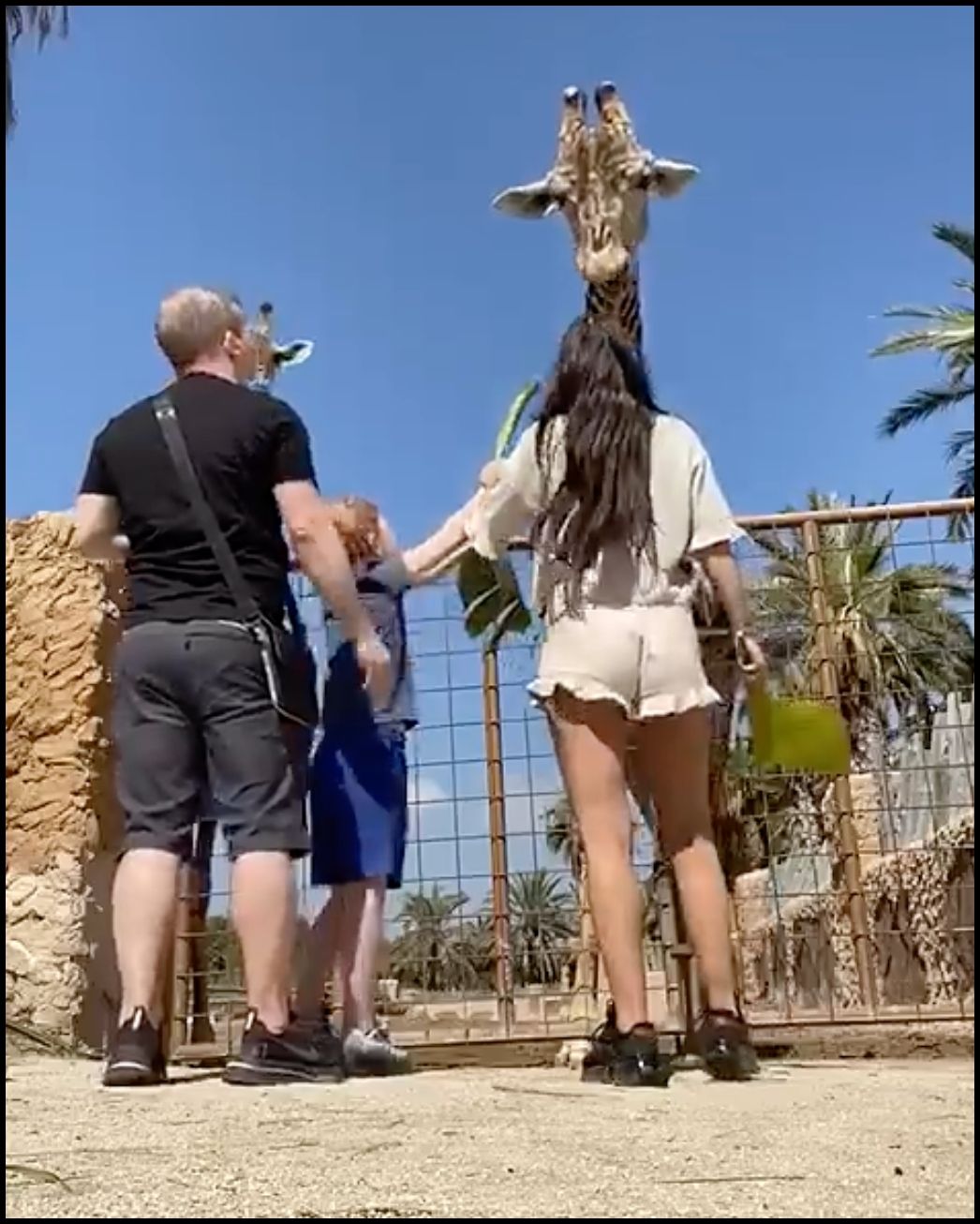
Video & Story
If you would like to explore the ideas in this post, the LessonStream mini course – Video & Story – is the perfect place to start.
👉 Find out about Video & Story
Story Priming
If you have already done the course, you might recognise the picture dictation as an example of a story priming technique.
This is an idea I shared in another blog post.
👉 Five Reasons for Story Priming
Thank you for reading 🤗
Jamie
Sign up to the LessonStream Post and get fresh ideas for teaching with video, image and story – straight to your inbox. I'll also send you my ebook – Seven Ways to Curiosify Your Students