A quick guide to mindful scrolling
Aug 02, 2026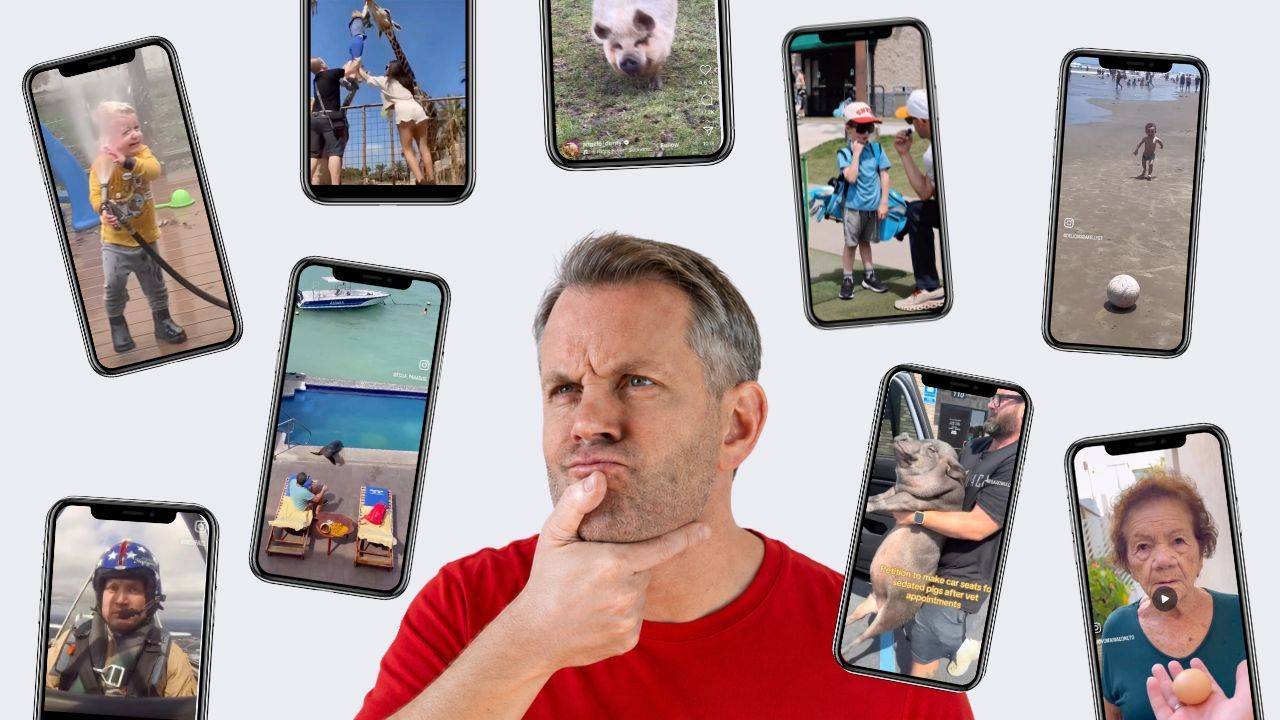
Your video feed is a powerful teaching resource – here's how to get more out of it
Recently, I came across a clip of an interview with a shy young golfer. He’s only about six years old and he's wearing an oversized cap with sunglasses.
The interviewer asks, ‘If you could be really good at just one part of golf, what would it be?
The little boy replies, ’It would be awesome!'
View this post on Instagram
This cute misunderstanding all centres around that tiny word: it.
- For the interviewer, it = a specific part of the golf game, yet to be named.
- For the child, it = the whole scenario described in the question – being really good at one part of golf.
As an English teacher and trainer, I'm always drawn to stories of misunderstandings and in my mind, this one is perfect for the classroom.
Like many of the videos I use in my teaching and training these days, I found this one on Instagram, although it could have been any video scrolling app such as TikTok, YouTube or Facebook.
To be clear, I don't use apps like this in my classes or workshops. (In the case of Instagram, I make use of the site's download feature to use videos offline). Nor do I encourage students or trainees to use them out of class. We all know how addictive they can be, not to mention the huge amount of highly-problematic content including propaganda, AI slop, videos designed to scam and content that can harm young people's wellbeing.
Despite that, most people I know spend at least some time each week scrolling. And if that applies to you, you will know it's not all doom. Within the chaff, there is also gold in the form of human stories worth appreciating – like the young golfer misunderstanding.
Finding story-worthy videos
I am writing this post following a question that came up on my Video & Story course. Heather asked:
Do you have any tips for finding good video clips to use in class?
I've been asked this question many times before, and I like to compare it to a more general one: where do you find your stories?
Both questions make the same assumption: that if you find the video, or live the experience, you will automatically recognise its potential.
But this isn't true. It's one thing to find the video or live the experience. It's another thing entirely to recognise its story-worthy value.
Fortunately, this is not difficult to do. All it takes is a bit of awareness.
Five tips for mindful scrolling
1. Set a limit to the amount of scrolling you do each day – 20 or 30 minutes for example.
2. Don't feel bad while you are scrolling. See it as a constructive activity.
3. Try not to scroll on autopilot but think about what you see. Look past the doom and look for the fun, beauty and humanity.
4. For each video that catches your eye, watch it two or three times and ask yourself three questions:
- Is this video meaningful to me?
- If so, why? What is my connection to it? What do I like about it?
- Could I imagine telling a friend about it in conversation?
If the answer to all three of the above questions is yes, save the video.
5. Every now and again, rather than scrolling through your live feed, scroll through your saved videos. This will allow you to connect with all those worthy clips you may have forgotten.
Video & Story
By engaging with videos in this way, you may find yourself referring to them in conversation. In this case, leave your phone in your pocket and tell the story in the good, old-fashioned way.
If you 'tell' your video well, people will want to see it for themselves. If you told it very well, they will be disappointed when they do!
The everyday activity of putting video into words is what I refer to as 'Videotelling'. In the classroom, Videotelling is a great way to develop students' storytelling skills and confidence.
Video & Story
If you would like to explore the ideas in this post, the LessonStream mini course – Video & Story – is the perfect place to start.
Jamie
👉 Find out about Video & Story

Sign up to the LessonStream Post and get fresh ideas for teaching with video, image and story – straight to your inbox. I'll also send you my ebook – Seven Ways to Curiosify Your Students