The Secret to Storytelling Success
Sep 03, 2026
Storytelling is an invisible craft. Here are three things to think about.
What is the secret to storytelling success?
This is one of those questions I like to ask on my courses and workshops.
Common answers include good eye contact, charisma, positive body language, passion and articulation.
All of these matter. But they all focus on the performance – the visible part.
What you don't see is the work behind the scenes.
Storytelling is an invisible craft. It requires attention to detail and an awareness of devices that allow us to guide the listener through a narrative.
The secret to storytelling success is simple: preparation.
An example
One of my current favourite stories for conferences and workshops is titled Giraffe One, Humans Nil.
It starts like this:
Did you know that some zoos allow members of the public to hand feed the giraffes?
🦒
Picture the scene.
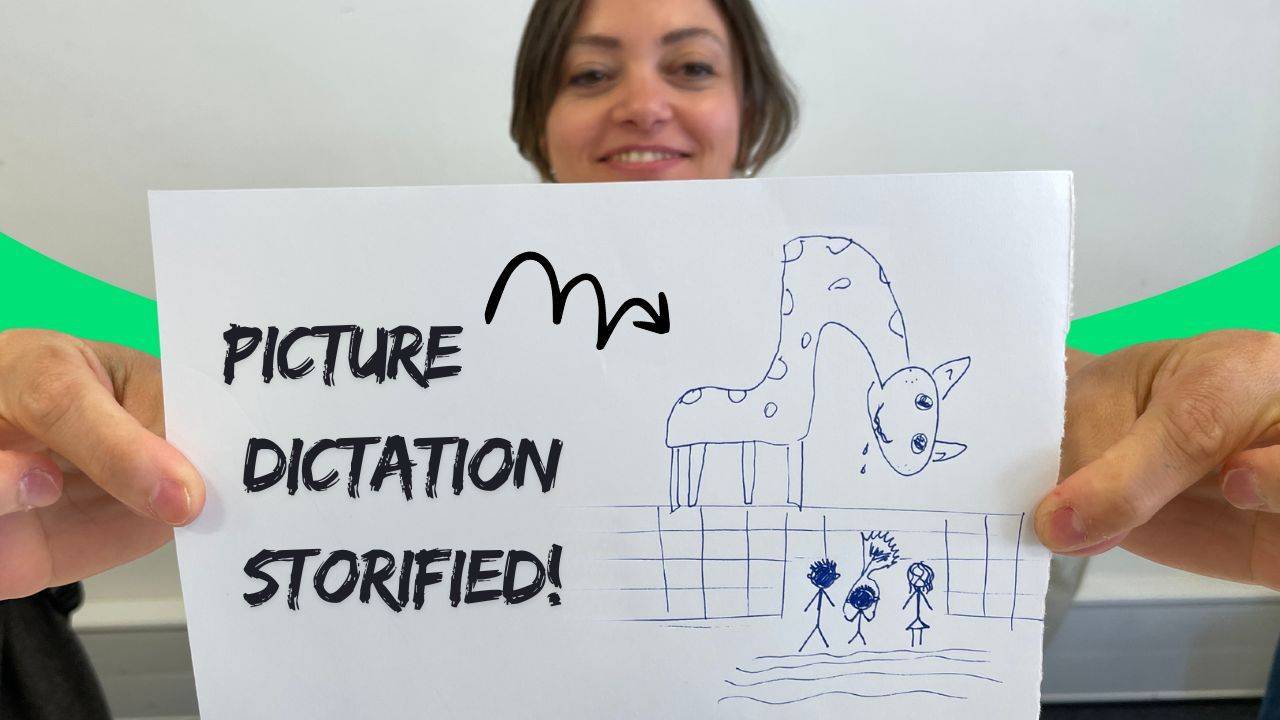
Three visitors at a zoo.
Mum, dad and their boy – he looks around seven or eight years old.
They are standing with their backs to us.
In front of them, there’s a fence.
And on the other side of the fence, facing us but looking down at the humans, is a giraffe.
A hungry giraffe – hoping for a snack.
The boy is in the middle.
His dad is on his left.
His mum is on his right.
He’s holding some sort of large green leaf with a long, thick stalk.
We don’t know exactly what it is.
But whatever it is, it’s exactly the sort of thing you like – if you are a giraffe.
Three devices
Here are three things to think about when preparing your story:
1. Set up the action
Stories are like houses: they need foundations. In storytelling, that foundation is the set-up.
Think about your listener and ask yourself, ‘What information do they need in order to follow the story as smoothly as possible?’
For example, I was unaware that some zoos allow humans to feed giraffes – see this Saint Louis Zoo webpage.
That’s why the story script above begins by mentioning it. Without that detail in the set-up, listeners could get distracted.

2. Let your listener visualise early
The more abstract the information, the more likely it is that you will lose your listener’s attention.
Be kind – let your listener visualise a location, situation or scene as early as possible.
In the story script above, there is an important line that invites listeners to do exactly that: ‘Picture the scene.’
After that, nearly every line gives them something to see.
3. Identify key details
In the story script above, notice how much attention I give to the phrase ‘a large green leaf with a long, thick stalk’.
That detail is central to the plot, so drawing attention to it plants a seed for an important connection later.
I also ‘hedge’ – admitting I don’t know the exact plant type. This signals to the listener that if I don’t know, they don’t need to know either. They just need to visualise the leaf in the boy's hands.
Key details like this are generally the ones we have to emphasise when we tell the story.
If you teach with stories, this is the sort of preparation that makes the difference.
The full Giraffe One, Humans Nil story script and demo video are included with Video & Story – the LessonStream mini course (see below).
Video & Story
If you would like to explore the ideas in this post, the LessonStream mini course – Video & Story – is the perfect place to start.
Thank you for reading!
Jamie
👉 Find out about Video & Story

Sign up to the LessonStream Post and get fresh ideas for teaching with video, image and story – straight to your inbox. I'll also send you my ebook – Seven Ways to Curiosify Your Students