How stories shape thinking
Feb 25, 2026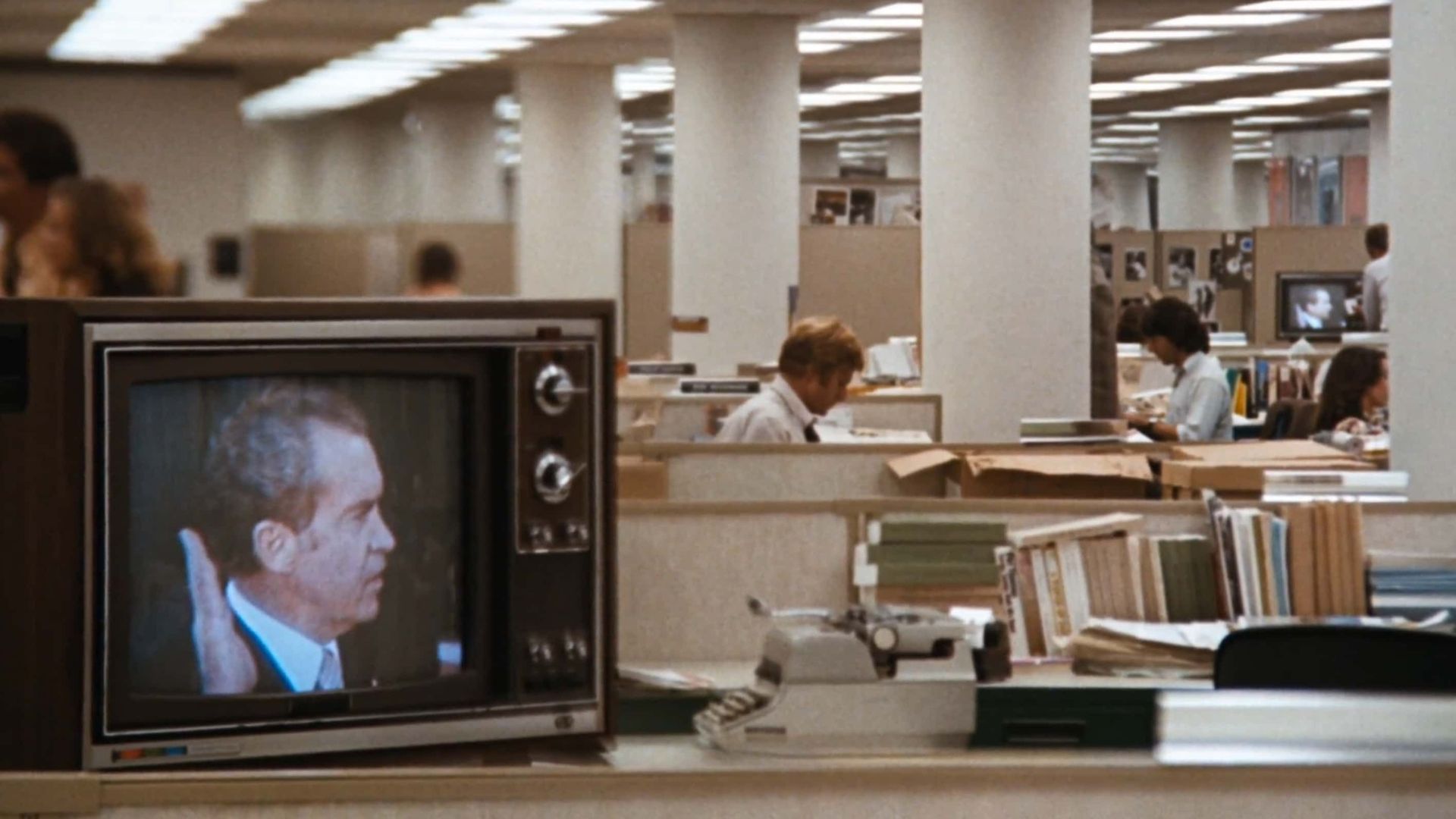
This image is 50 years old. It's never been more relevant ...
This is a great image for the classroom. Show it to your students, have them describe what they see and ask:
- What is going on here?
- How many of the people can you name?
- What's the film?
- What's the story?
- How does it connect with the present day?
Then you can give them the story.
The story
In the foreground of the shot, a televised speech by Richard Nixon. Meanwhile in the background, legendary journalists Bob Woodward and Carl Bernstein (played by Robert Redford and Dustin Hoffman) are working on the story that would eventually lead to his impeachment.
This is a scene from the 1976 film All the President's Men.
The Watergate scandal is to The Washington Post what the Eiffel Tower is to Paris. Woodward and Bernstein's reporting in 1972 elevated the newspaper to iconic status – a symbol of world-class investigative journalism.
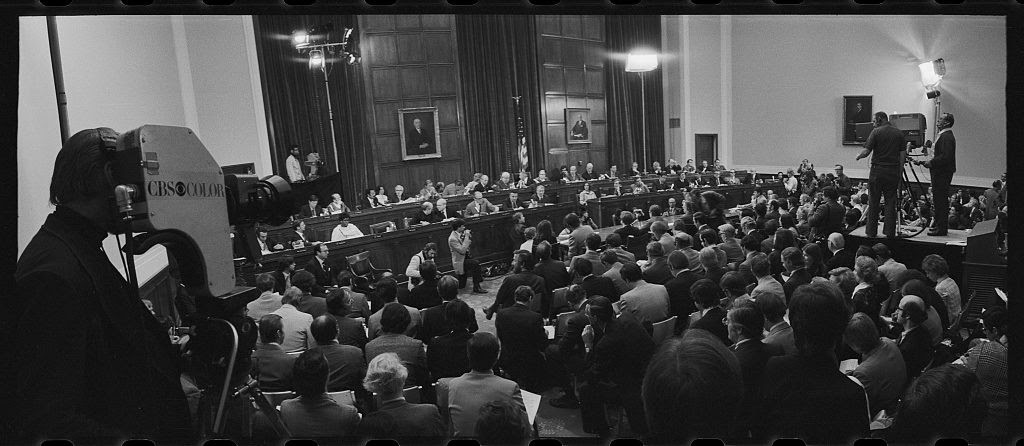
The first day of the Nixon impeachment inquiry, May 1974
Photograph by Thomas J. O'Halloran
(Public domain image)
A current connection
Today, this image feels tragically ironic.
In 2024, Jeff Bezos (who acquired the paper in 2013) made the surprise decision to end the newspaper's tradition of endorsing a presidential candidate. Many regarded this as a cynical move, and it immediately cost the paper a quarter of a million subscribers.
Then, earlier this month (February 2026), he cut the newspaper's staff by one third.
In between those events, his company Amazon paid $40 million to license a Melania Trump film – a move widely regarded as an attempt to win favour with the president.
Newspapers like The Washington Post are essential to healthy democracies. They investigate corruption and hold power to account – which is exactly why Donald Trump sees a free press as his enemy.
Jeff Bezos has weakened one of the world's most respected newspapers. This is a dark moment for American democracy.
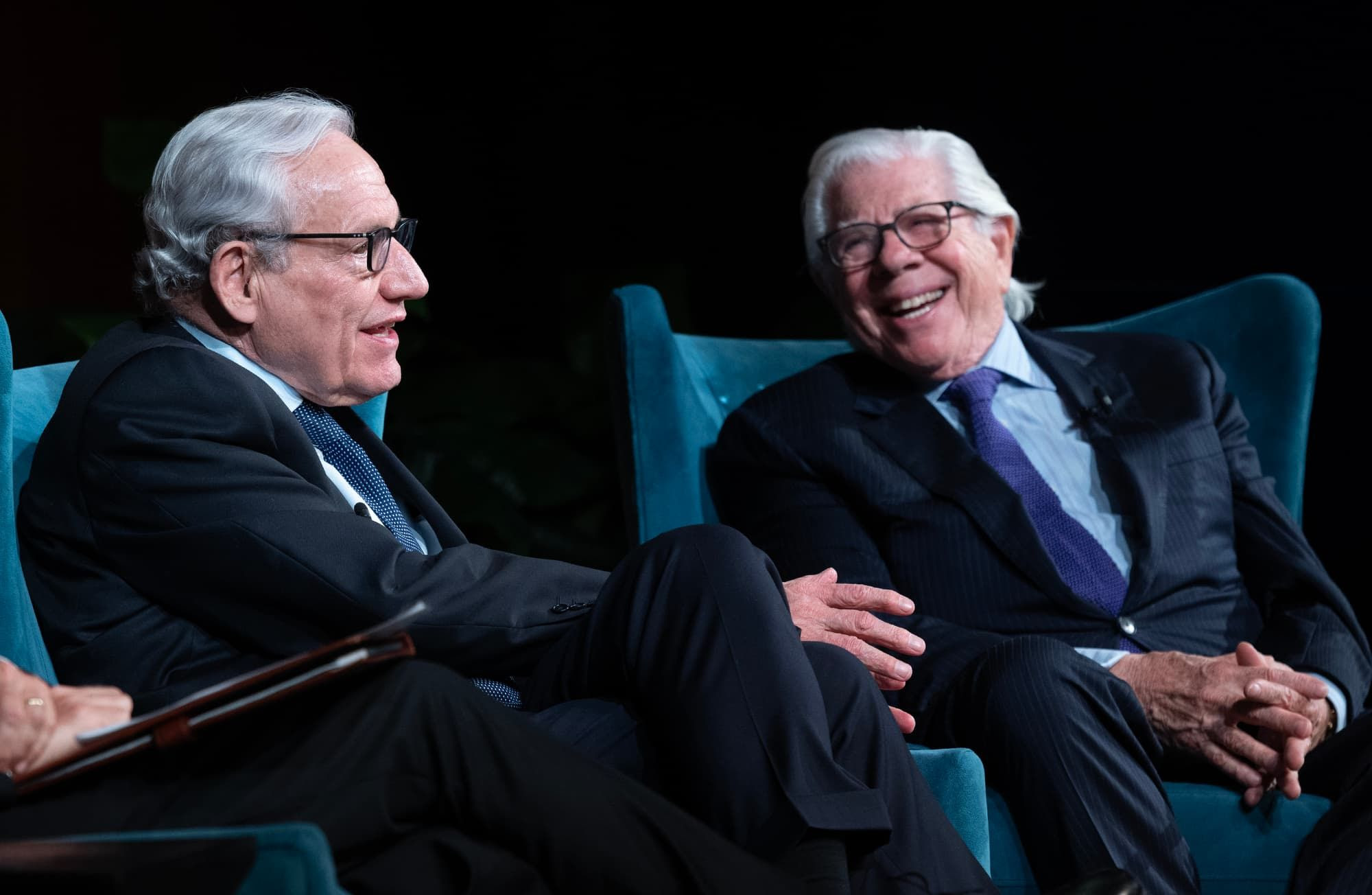
Washington Post reporters Bob Woodward and Carl Bernstein, 2024
Photograph by Jay Godwin
(Public domain image)
Understanding stories
I love the story of All the President's Men. And I love the scene at the start of this post.
The image is complex and saturated in story. It sits at the heart of a web of narratives intertwined in politics, history, journalism, media, law, cinema, biography, current affairs and a changing world order.
And those narratives matter – because stories are never neutral. They are always told from somewhere, by someone, for specific purposes.
Understanding how stories work, how they travel and how they can be used to manipulate and influence is one of the most important skills we can develop. It sits at the heart of critical thinking, and can allow us to make sense of an otherwise overwhelming world.
How Stories Shape Thinking
If you're interested in navigating our story-saturated world with clarity – and helping your students do the same – my new course is for you.
- Explore how stories work and how they shape behaviour and belief
- Equip students with critical thinking skills to recognise stories as tools of influence
- Get ready-to-use teaching ideas that spark genuine discussion and collaboration
It would be great to have you on board 🚢
Sign up to the LessonStream Post and get fresh ideas for teaching with video, image and story – straight to your inbox. I'll also send you my ebook – Seven Ways to Curiosify Your Students