How to spot an AI video
Feb 06, 2026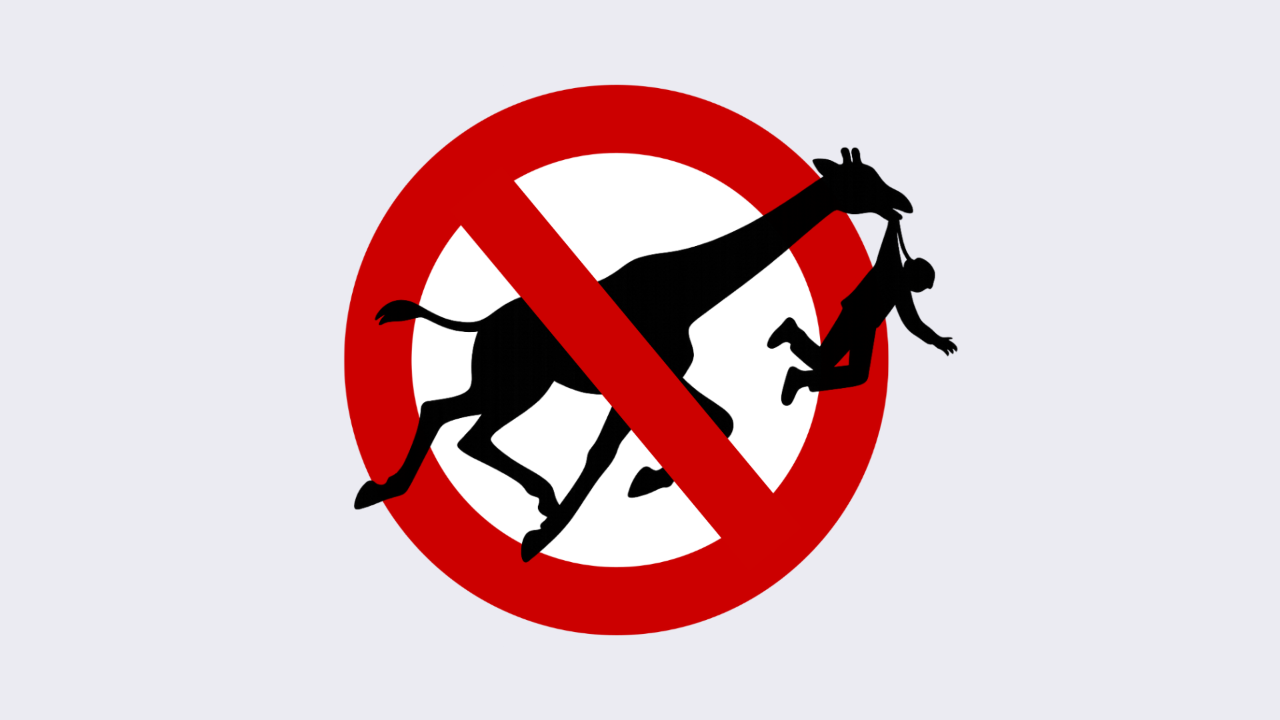
The thin line between healthy scepticism and unhealthy cynicism
Year of the giraffe
2025 was the year I fell in love with giraffes.
It all started with a storyworthy moment, captured on camera and shared on Instagram.
There’s a family at the zoo feeding a giraffe. A young boy offers it a large green leaf but holds on to the thick stalk for a bit too long. The giraffe lifts him off the ground before his parents step in, each grabbing a leg in what briefly becomes a tug-of-war. It ends without harm and with laughter from everyone except the giraffe.
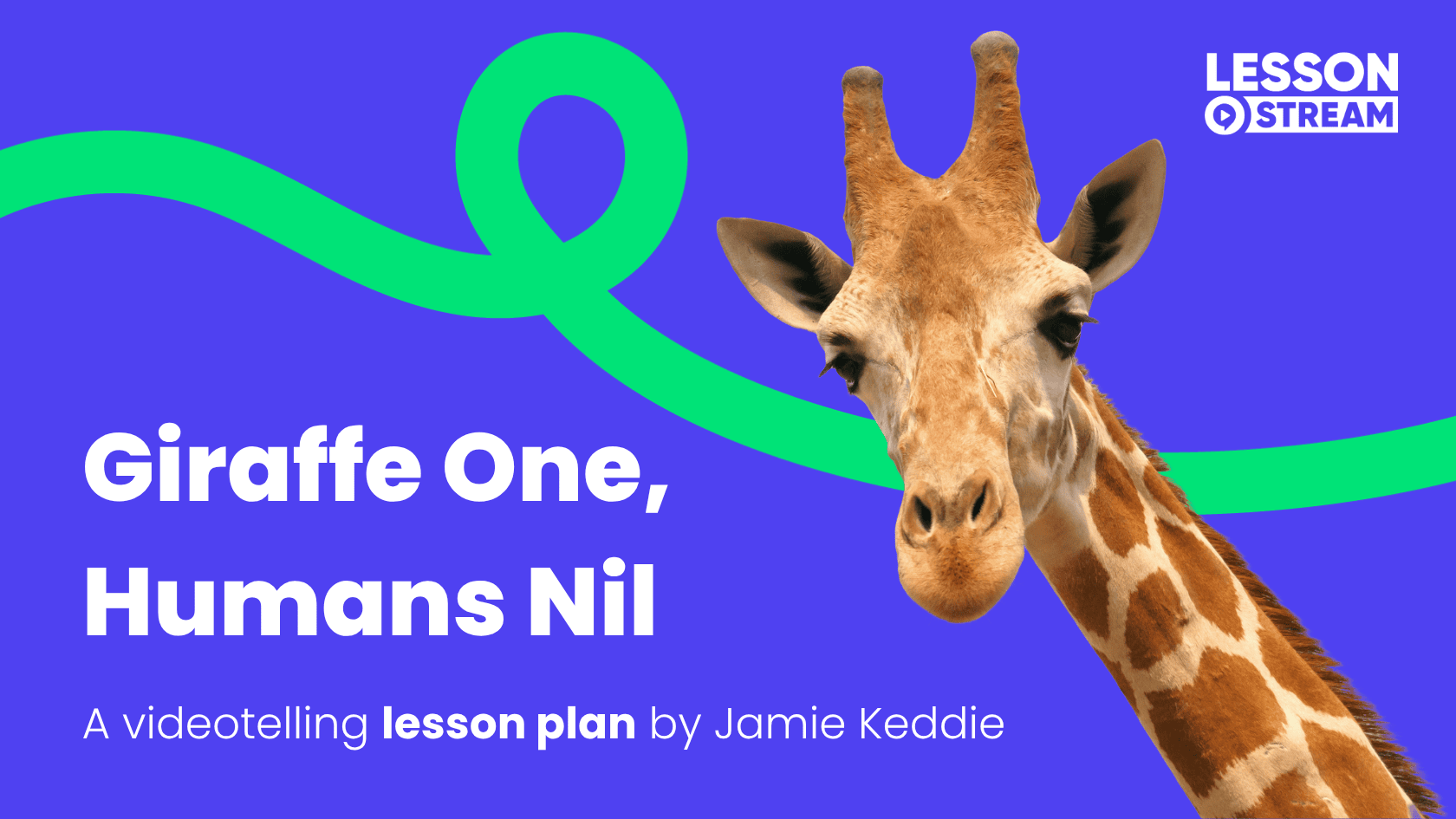
This is a perfect clip for Videotelling – the everyday storytelling act of putting short videos into words – and I used it as the basis for a lesson plan titled Giraffe One, Humans Nil.
In the activity, students hear the story of the giraffe incident before they see the video. Then they choose another video of a human–giraffe encounter and prepare to tell that story in groups.
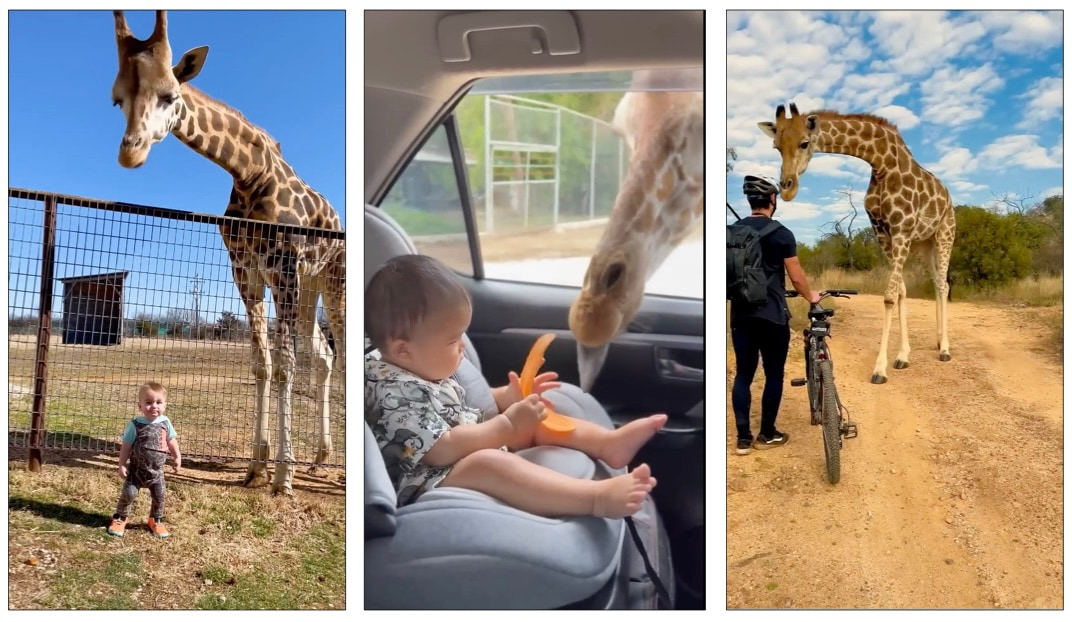
Creating the lesson plan required hours on Instagram, TikTok, and YouTube, sourcing, viewing, and curating giraffe videos suitable for the activity. It was during this time that my love affair began.
I experienced something quite profound: how had I never truly acknowledged these incredible, gentle, bizarre creatures before?
Comedian Bryan Callen apparently had a similar experience. In his 'Giraffes are fabulous' bit, he describes his giraffe epiphany and what it must have been like to imagine a giraffe into existence.
'Have you ever seen a giraffe up close? It's too fabulous. It's like a very gay camel.'
When giraffes go rogue
Naturally, the algorithms picked up on my new passion and started to push more giraffe videos into my feed.
At first, I was quite happy about this. But by late 2025, things began to change. The animals I had learned to love suddenly turned into trashy giraffes. They were no longer gentle and elegant. They were now rough and terrifying. I watched in horror as they snatched tourists from open-top safari buggies, running off with them screaming for their lives, their bodies swinging helplessly from the creatures’ mouths.
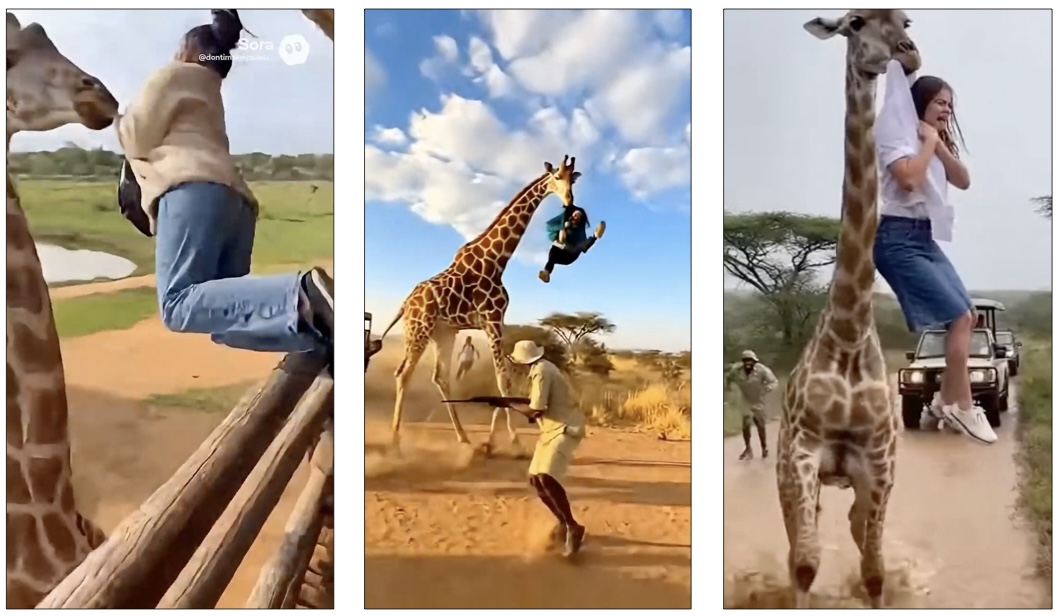
I might have smiled at the first video. By the twentieth, I was actually upset.
Of course, these clips are not real. They are generated by AI video generation tools such as Sora, the same company behind ChatGPT.
It saddens me to see these beautiful creatures misrepresented so grotesquely. And it angers me to know how little the companies behind the tools and platforms have done to curb the rise of AI slop – which Merriam-Webster named its word of the year in 2025.
How to spot a fake video
With videos like the ones above, it’s fairly easy to spot the fakes – as long as you are paying attention. But in other cases, it can be extremely difficult. On my Videotelling Course, I have had to console a few teachers who felt stupid, embarrassed or upset after choosing to work with videos they hadn’t realised were fake. It’s a trap we can all fall into.
At the moment, it is still possible to decipher real from fake content through careful technical scrutiny of the video material itself. If you would like to learn more about this, I recommend following Jeremy Carrasco, who educates his audiences on Instagram, YouTube, and TikTok under the username @showtoolsai
The same cannot be said for AI-generated photographs. Tools like Google’s innocently named Nano Banana have made it virtually impossible to distinguish between what is real and what is fake. And my guess is that video is heading the same way.
On my courses, I encourage participants to go for the less technical options first:
- Investigate the source: Find out who uploaded the video. Get a sense of the type of content they usually post. If it’s a trustworthy brand, it’s less likely to be fake.
- Look at the date of upload: Fake AI videos really began to take off and flood feeds around September 2025. Videos uploaded before then are more likely to be genuine but, of course, this is not a foolproof rule.
- Look for patterns: AI-generated videos often follow similar templates and lack originality. For example, if you find many similar videos of giraffe attacks, this should raise alarms.
- Expect exaggeration or drama: I would guess that the first video in this post inspired some of the fakes. Notice how unsubtle or over-the-top they are.
- Do a reverse image search: Take a screen capture of the video and do a reverse image search. This allows you to find other iterations of the same video.
The real problem
To the above list, it might be tempting to add ‘trust your instincts.’ Unfortunately, that may not be particularly good advice.
In this video, Jeremy Carrasco (mentioned above) reports a tendency for people to doubt the authenticity of videos that can be verified as real. This is not a case of healthy scepticism. When we habitually question everything we see without reason, we may inadvertently play into the hands of bad actors who want to dismiss genuine news as false. This effect is sometimes called the liar’s dividend – a term coined in 2018 by law professors Bobby Chesney and Danielle Citron.
The strategy was actually explained last year by Donald Trump himself. When asked about a video of a mysterious bag being thrown out of a White House window, he first claimed it was an AI video. Then he went on to say, ‘If something happens, real bad, just blame AI.’
A healthy mindset
Critical thinking is a process, not a stance. To explain what I mean, I’ll give the last word to Alan Melikdjanian, better known online as Captain Disillusion:
'The power to tell real from fake doesn’t come from being a world expert or mistrusting every single thing you see. It comes from an honest willingness to change your opinions and beliefs based on new facts. So learn to enjoy being wrong. The world might start making more sense.'
LessonStream Videotelling
👉 The lesson plan Giraffe One, Humans Nil is available here.
👉 My course Videotelling – in which students use short videos to practise storytelling skills and develop visual literacy starts next month. Find out more here.
Sign up to the LessonStream Post and get fresh ideas for teaching with video, image and story – straight to your inbox. I'll also send you my ebook – Seven Ways to Curiosify Your Students