Taking picture books apart
Oct 12, 2025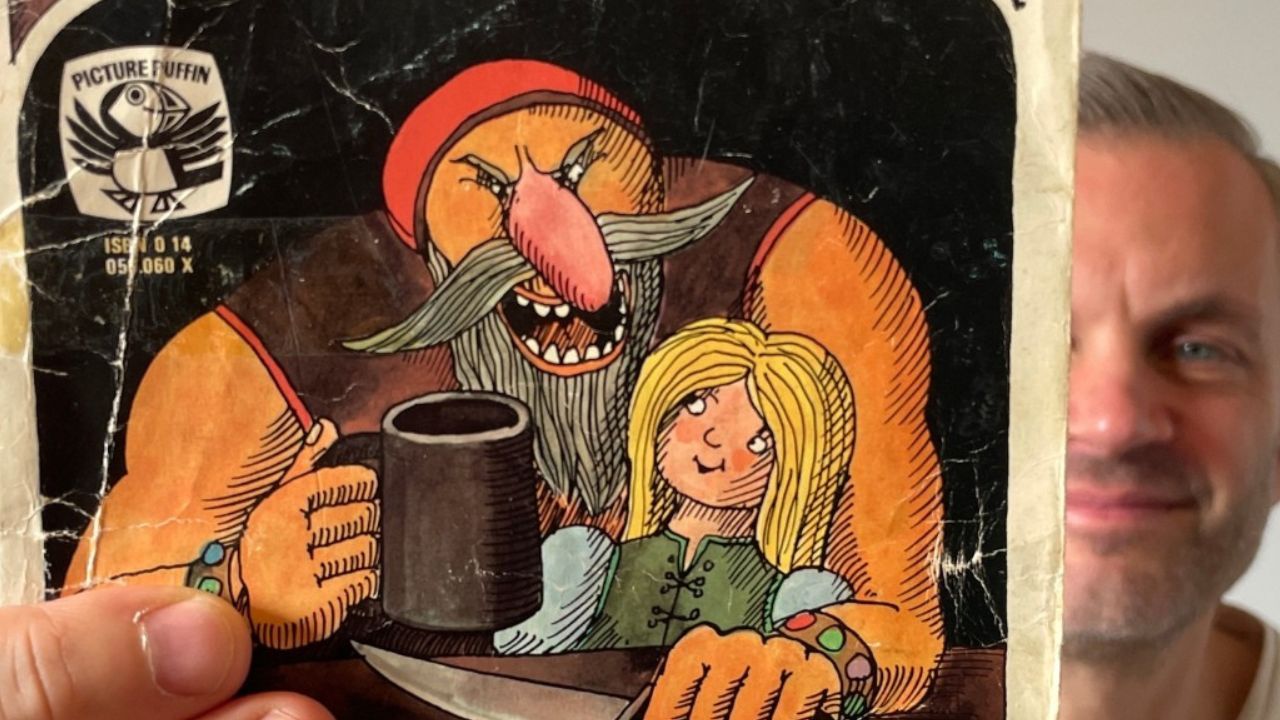
Picture books provide a great way in to teaching with video.
Zeralda’s Ogre
Once upon a time there lived a lonely ogre.
Like most ogres he had sharp teeth,
a bristling beard, a big nose,
a big knife, a bad temper,
and a huge appetite.
Of all the things,
he liked little children
for breakfast the best.
These are the opening words of a picture book titled Zeralda’s Ogre (Tomi Ungerer, 1967). Read them again and consider what the accompanying illustration might look like. You could even put yourself in the illustrator’s shoes and imagine what you might create.
Since this is the first page of the story, you would probably want to introduce the ogre to the reader. You would need to show him with his sharp teeth, bristling beard and large nose. But where would you place him, and what would he be doing?
What about the ogre’s appetite for children? Would you choose to represent that in your illustration – and if so, how? Would he be about to eat a child, in the act of doing so, or finishing off a grisly meal? Or would you choose something more subtle and implicit?
Words and pictures
Zeralda’s Ogre was one of many books that featured in my childhood. As an adult, I enjoy spending time with books like this, reconnecting with my past and remembering how they made me feel. Often, it’s the pictures that bring back those feelings most vividly.
The opening image of Zeralda’s Ogre is a perfect example: the black background, the caged child, the face we cannot see but can only imagine. I remember the terror.
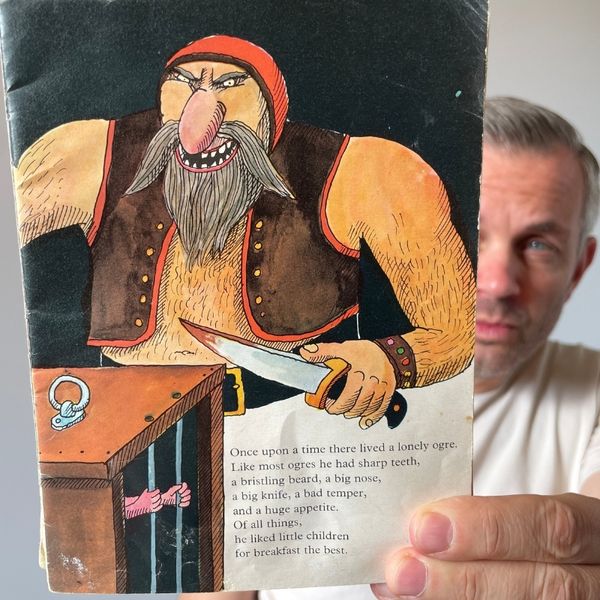
In a book like this, words and images provide information that is different but complementary. They work together to co-construct meaning and create something greater than the sum of their two parts. It’s a perfect marriage.
A perfect marriage?
The interplay between words and pictures is an example of multimodality. And to give you an even better example of how this works, I’ll need to take you through the story of Zeralda’s Ogre to the final page. But first you need to know what happens.
Synopsis: Basically, the ogre eats all the children in the town, except for one: a six-year-old girl called Zeralda. But just before he grabs her, he falls and knocks himself unconscious. Zeralda, a phenomenal cook, nurses him back to health with her culinary skills, and the ogre is weaned off children. Zeralda grows up into a beautiful young woman and decides to marry the ogre – but only once he agrees to shave off his beard.
By today’s standards, the story hasn’t aged well. There is no justice for the families of the devoured children, and the ogre marrying someone who was a child when they first met gives the whole thing a Woody Allen–ish awkwardness.
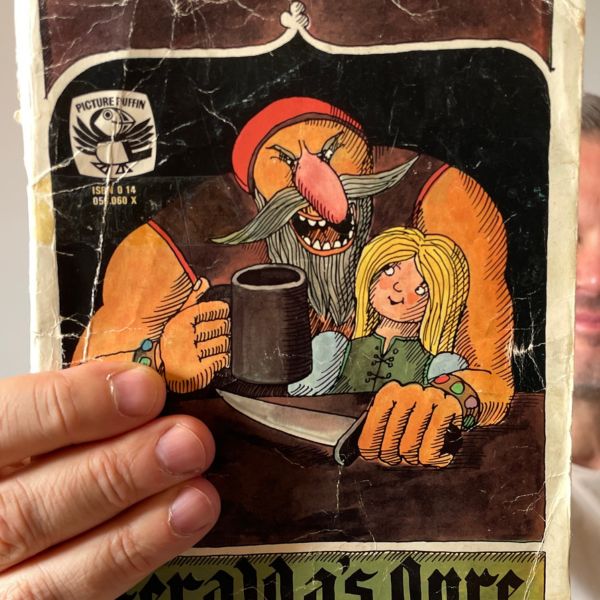
In fact it’s even worse than that. The front cover of the book tells us that this is actually a dark tale of Stockholm Syndrome. But this was my childhood, and there’s nothing I can do about that.
The last page
Upon reconnecting with this book as an adult, I noticed a detail on the last page – something I never saw as a child.
It’s such a small detail, but it completely changes the story. Can you see it?
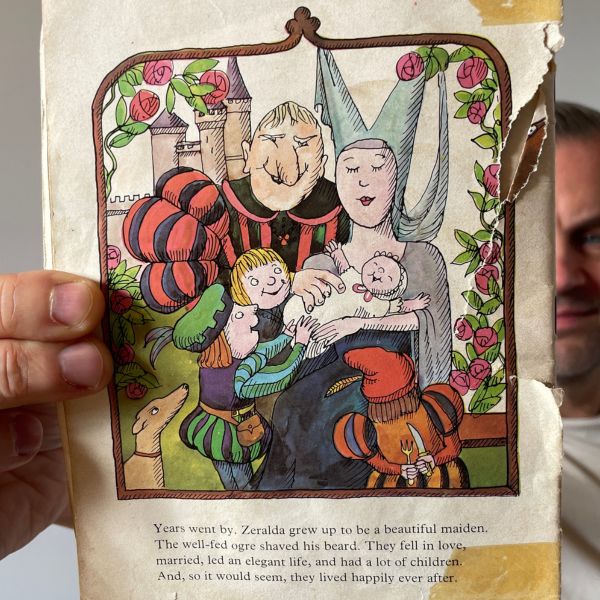
It’s the child at the bottom right, hiding a knife and fork behind his back. Does he intend to eat the baby?
This is no longer just a fairy tale. It’s a warning: never get romantically involved with an ogre. And if you do, never have a family with one!
This is a perfect demonstration of multimodality in action.
Taking video apart
For teachers, understanding how words and images work together is one of the most practical ways to unlock the potential of video.
But first, we need to train ourselves to recognise multimodality – how different modes of communication combine to create meaning.
This is something you will explore on my new course – Taking Video Apart. It would be great to have you on board 🤗
Sign up to the LessonStream Post and get fresh ideas for teaching with video, image and story – straight to your inbox. I'll also send you my ebook – Seven Ways to Curiosify Your Students