Listen, what's the story?
Sep 22, 2025
A classic technique for engaging students with a video narrative
Audio first
When it comes to engaging students with a video, there’s nothing quite like an audio-first approach.
If you have never tried this before, listen to the video below and ask yourself:
- What sound effects do you hear and how would you put them into words?
- What do you think is happening and who is involved?
- What genre of video could this be?
Teachers have been using this approach for decades – ever since VCRs went mainstream in the 1980s and sparked a new wave of interest in teaching with video.
Back then, techniques like this were referred to as ‘active viewing’. On my course, I call them ‘story priming’.
To explain my reasons, let’s consider why we might take an audio-first approach to video. What is the value of the technique? What might our aims be?
Here are five reasons:
One. Language output
Perhaps the most obvious reason is that the isolated audio requires students to put creative ideas into words.
In this case, they might produce noun phrases to describe what they hear – footsteps, elevator music, a belch, a chain saw, a splashing sound. Alternatively, they might ask the teacher questions or collaborate to create short predictive narratives.
Two. Key language
Were you able to catch the lyrics of the thrash metal track? The key line, repeated again and again, is:
🎵 Belly’s gonna get you.
The audio-first approach allows us to draw attention to this phrase early on and make sure students understand its importance in the story.
Three. Curiosity
Video is a multimodal medium: different modes (most notably, audio and visual) combine to create meaning.
The visuals and the music/sound effects each contribute their own layer, and together they create a story greater than the sum of their parts.
When students hear the audio without seeing the images (or vice versa), they are denied an essential part of the meaning. The result of this information gap is curiosity – an essential ingredient for keeping your students engaged and motivated.
Four. Comprehension
In response to the isolated audio, you will have asked questions about the video and the story. Inevitably, your imagination will have provided some answers. And although those answers might be confused or full of holes, the important thing is that you have predicted a narrative.
When students see the full video, they can compare their imagined narratives with the one on the screen – a process that reinforces comprehension.
In fact, the next stage of this activity is not viewing at all. Instead, students get the story from you, the teacher, which makes the comprehension element even more important.
Five. It primes students for the story
Of course, you could press play at this stage and let students see the full video. But that would miss a highly-meaningful language opportunity.
Students are curious and primed for the story, so why not take advantage by giving them an experience which is verbal, rather than visual?
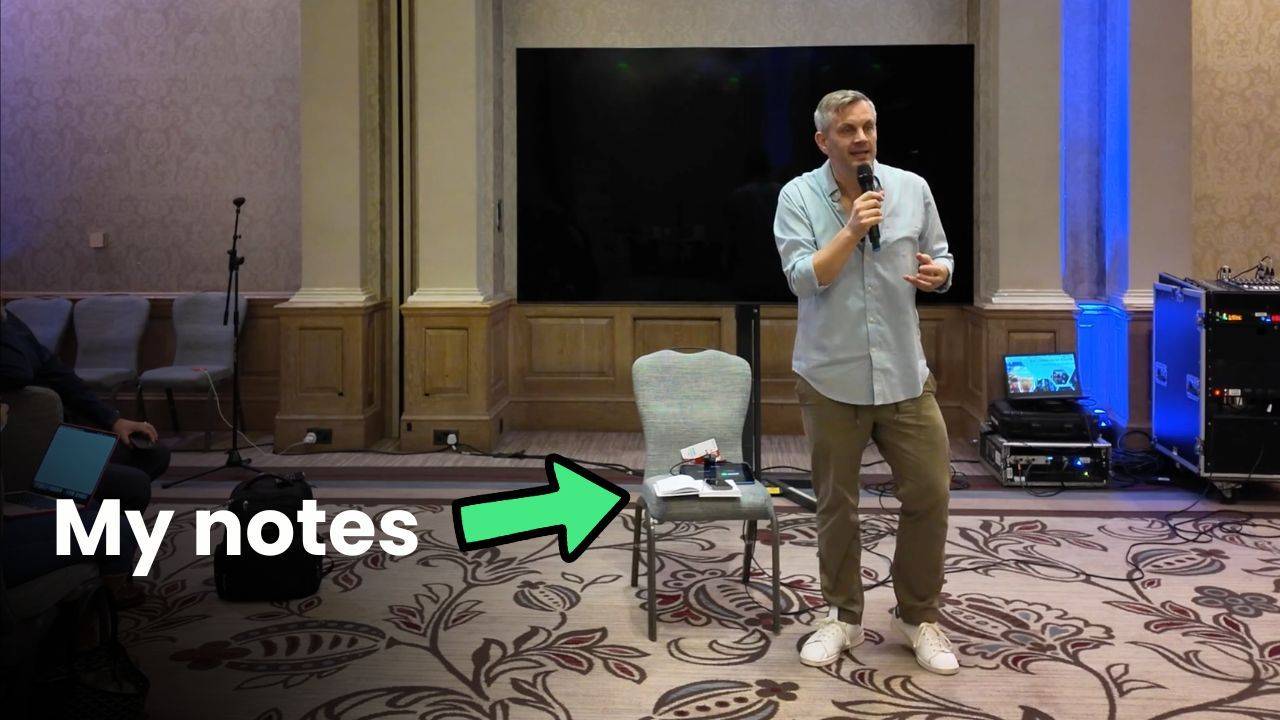
To show you what I mean, here is me telling the story at a conference earlier this year.
This is 'videotelling' – the everyday human act of putting video narratives into words – the most communicative way to work with the medium.
From here, it’s over to your students. They have to find an advert that uses story to sell, and prepare to tell it in the classroom.
If you like the idea of using video for building storytelling skills and confidence, my Video Course is the perfect course for you.
About the course
In the 1980s, ‘active viewing’ transformed the way teachers used video in the classroom.
In this course, we revisit and evaluate those classic techniques, adapting them for today’s online video culture.
You will also discover Videotelling and learn fresh approaches to teaching with short-form content on Instagram, YouTube and TikTok.
It would be great to have you on board 🚢
Sign up to the LessonStream Post and get fresh ideas for teaching with video, image and story – straight to your inbox. I'll also send you my ebook – Seven Ways to Curiosify Your Students